Grass-Fed Tallow: Why the Source Matters
Not all tallow is the same. If you are looking into beef tallow skincare, you will soon come across the words “grass-fed”. But what does grass-fed tallow actually mean, and why should the source and processing of an animal fat matter for a skincare product at all? Here is a clear, factual overview.
In short
Grass-fed tallow comes from cattle that spend much of their lives on pasture and eat mainly grass. The source matters because husbandry and feed help shape the composition of the fat, and many people care about traceable animal welfare. Careful processing is just as important: only gentle rendering and thorough purification turn raw fat into an odour-neutral, consistent base for skincare.
What does “grass-fed” mean for beef tallow?
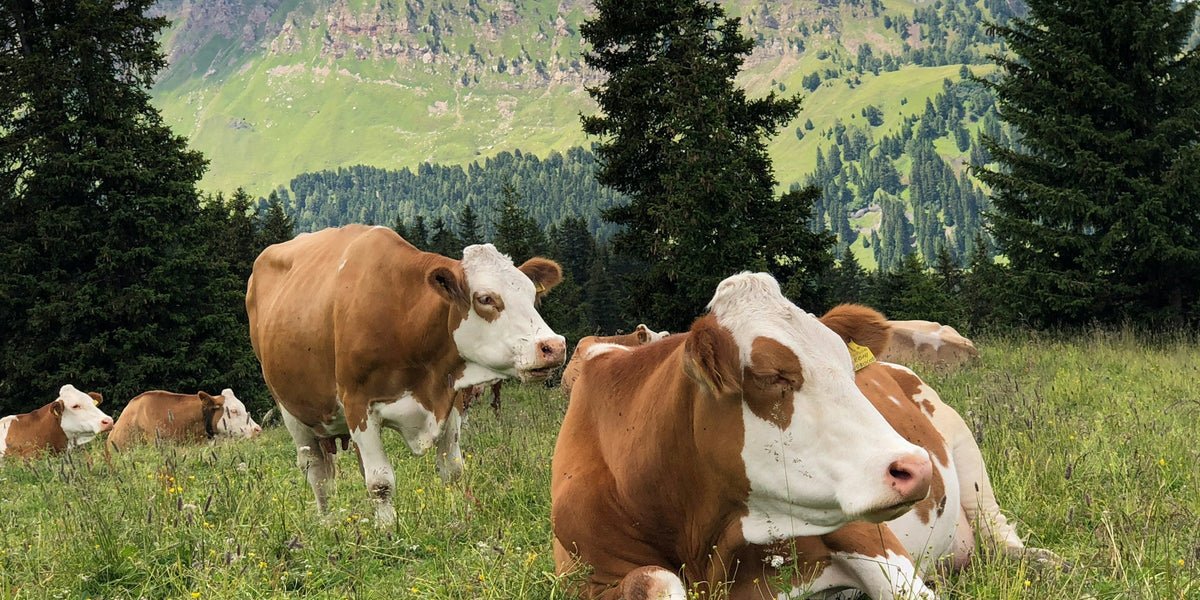
“Grass-fed” describes cattle that spend a lot of time outdoors on pasture and feed mostly on fresh grass, and on hay in winter, rather than mainly on concentrated feed. In German the closest term is “Weidehaltung”, which literally means pasture-raised.
Worth knowing: these terms are not defined the same way everywhere. How long the animals actually spend outdoors and how much of their diet is grass can differ from one supplier to the next. A certification or a concrete description tells you more than a label word alone. If this matters to you, it is worth asking the manufacturer.
What is tallow, and where does it come from?
Tallow is the solid fat of ruminants such as cattle. For skincare, the fat around the kidneys is often used because it is especially firm and even. Tallow is a by-product of meat processing anyway, so using it instead of discarding it fits the idea of making use of the whole animal.
Chemically, tallow consists mainly of triglycerides with oleic, palmitic and stearic acid. It also naturally contains small amounts of fat-soluble vitamins. Rendered beef tallow is solid at room temperature and melts on warm skin. For the basics, see our article What Is Tallow Skincare?
Why does the source matter for skincare?
There are several reasons to choose grass-fed tallow, and they complement each other:
- Feed and fat: The composition of an animal's body fat depends in part on what it eats. Husbandry and feed therefore help shape the raw material that later becomes the balm.
- Animal welfare: For many people, pasture-raising signals husbandry that comes closer to the natural needs of cattle. Anyone using animal-derived ingredients carries a particular responsibility here.
- Traceability: A manufacturer that names the source of its tallow makes the product more transparent. That builds trust, especially for an ingredient many people still find unfamiliar.
- Consistent quality: A clearly defined raw material from a reliable source helps keep texture and properties stable from batch to batch.
Why rendering and purification are so important
The source is only half the story. Raw fat contains connective tissue, protein and water as well as fat. To become a nourishing skincare base, it has to be rendered: the fat is melted slowly at a moderate temperature, and the solid parts are then filtered out. Depending on the method, the tallow is purified further afterwards.
This step has a big impact on the finished product:
| Property | Carefully processed | Carelessly processed |
|---|---|---|
| Smell | Neutral or barely noticeable | Can smell of fat or frying |
| Colour | Light and even | Often darker or patchy |
| Texture | Smooth, melts evenly | Grainy or uneven |
| Shelf life | More stable, because protein and water residues are removed | Residues can lead to changes sooner |
Protein residues in particular are behind the “beefy” smell many people fear with tallow. Well-purified tallow, by contrast, smells of very little. To learn more, read Does Tallow Balm Smell Like Beef?
How can you recognise high-quality tallow in skincare?
Without a lab you cannot check everything, but a few pointers help:
- A clear statement of origin: The manufacturer says where the tallow comes from instead of just writing “animal fat”.
- Controlled production: Cosmetics made in a GMP-certified facility (Good Manufacturing Practice) follow fixed hygiene and quality standards.
- Smell: A good balm smells neutral or only of its essential oils, not of the kitchen.
- Texture: It is smooth, warms easily between your fingertips and melts on the skin.
- A short ingredient list: With a balm you can quickly see which oils and other ingredients sit alongside the tallow.
How does Primal Gems handle sourcing?
All Primal Gems balms are based on grass-fed beef tallow. They are made in Germany by a GMP-certified cosmetics manufacturer. The balms are water-free, with no parabens, no silicones and no added fragrance; their scent comes only from essential oils. Dermatest® tested them on sensitive skin and rated them “Excellent”.
Note: The day balm contains tea tree oil and the night balm lavender oil. Essential oils can irritate sensitive skin. Do a patch test before using a balm on your face for the first time, for example on the inside of your forearm.
Primal Gems
Tallow Face Balms
Day and night balm based on grass-fed beef tallow, made in Germany. Water-free, in a glass jar with a bamboo lid.
View productsFrequently asked questions
Is grass-fed tallow automatically organic?
No. “Organic” is legally regulated in the EU and tied to certification. “Grass-fed” describes how the animals are kept and fed. The two can overlap, but they are not the same thing.
Is tallow vegan?
No. Tallow is an animal-derived ingredient: rendered beef fat. It is a by-product of meat processing. If you want to avoid animal ingredients entirely, plant-based alternatives are the better choice.
What is the difference between suet and tallow?
Suet is the raw, firm fat around the kidneys. Tallow is what you get after rendering and purifying that fat. Skincare uses tallow, not raw suet from the butcher.
Can I render my own tallow and use it on my skin?
You can render tallow in the kitchen. For cosmetics, however, purity, hygiene and shelf life are hard to control at home. Cosmetics manufacturers use defined processes and quality checks for this.