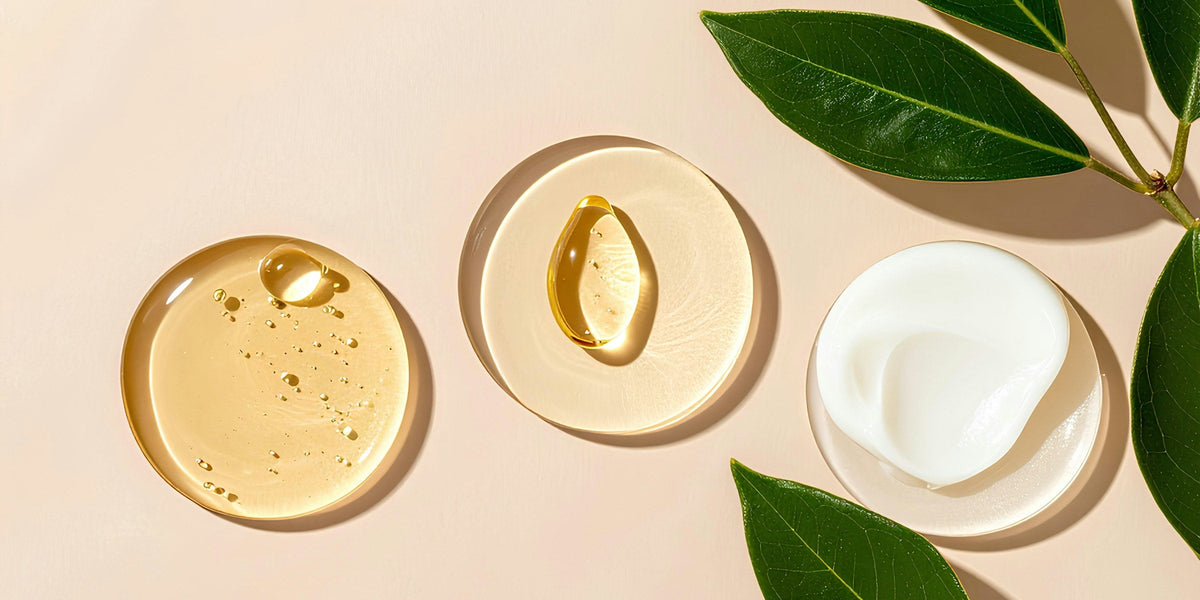
Minimalist Skincare: Fewer Products, Better Routine
Cleansing oil, toner, essence, two serums, eye cream, moisturiser, face oil: many bathroom shelves are packed, and yet skin does not necessarily feel any better for it. Minimalist skincare takes the opposite approach, with a few well-chosen products and a routine you can actually stick to every day. Here is what that looks like in practice and how to pare down your routine step by step.
In short
A minimalist skincare routine comes down to three basic steps: cleanse gently, moisturise and protect from the sun during the day. Fewer products mean fewer ingredients your skin can react to and a routine that is easier to keep up. Cut back gradually, change one thing at a time and give your skin a few weeks.
What is minimalist skincare?
Minimalist skincare does not mean neglecting your skin. It means using only what your skin actually needs and leaving out whatever sits on the shelf out of habit or because of a trend. The focus is on a small number of products that you choose deliberately and use consistently.
The foundation is the same for almost every skin type:
- Cleanse: Gently remove dirt, excess sebum, make-up and sunscreen.
- Moisturise: Give your skin back lipids and moisture and support the skin barrier.
- Protect: Apply sunscreen during the day.
Anything beyond that is an extra that can be useful, but it is not essential.
Why can less be more for your skin?
A pared-back routine has some very practical advantages:
- Fewer potential triggers: Every product brings its own ingredients. The fewer you combine, the fewer substances can irritate your skin.
- Easier to read your skin: If your skin reacts, you will find the cause far faster with three products than with ten.
- More consistency: A short routine is one you keep up even on busy days. Regularity often matters more for well-cared-for skin than the number of steps.
- Less effort and packaging: You save time, money and bathroom space, and less packaging ends up in the bin.
What does a minimalist routine look like?
Here is how a simple morning and evening routine can look:
| Step | Morning | Evening |
|---|---|---|
| 1. Cleanse | Lukewarm water or a gentle cleanser | Gentle cleanser that removes make-up and sunscreen |
| 2. Moisturise | Lighter care that absorbs quickly | Richer care for the night |
| 3. Protect | Sunscreen | Not needed |
Whether you use one product around the clock or separate day and night care depends on your skin and your preferences. We cover the pros and cons of both in Day Cream vs. Night Cream.
Tip: Whatever you cut, keep the sunscreen. A face cream or balm does not replace it, however rich it is.
How to pare down your routine step by step
Going from ten products to three overnight makes it hard to know what is going on if your skin reacts. A calm transition works better:
- Take stock: Line up all your products and note what you use each one for.
- Spot duplicates: Two moisturisers, several serums with a similar purpose, or toner and essence one after the other are typical candidates to drop.
- Set your basics: Choose one cleanser, one moisturiser and one sunscreen that your skin tolerates well.
- Drop products gradually: Remove one product at a time and watch your skin for a while before dropping the next.
- Add with intention: If your skin needs something specific, add a single targeted product, not five at once.
Where do water-free balms fit into a pared-back routine?
Water-free balms suit the minimalist idea well. They contain no water, only nourishing lipids, which makes them very economical: a pea-sized amount covers face and neck. Their ingredient lists also tend to be short, so you know exactly what you are putting on your skin.
One example is care based on grass-fed beef tallow. Tallow consists mainly of triglycerides with oleic, palmitic and stearic acid and melts on warm skin. Primal Gems makes two balms with it: the day balm with squalane and grapeseed oil, which absorbs quickly, and the richer night balm with argan oil and retinyl palmitate. Together they cover the moisturising step morning and evening. For how much to use, see How to Use Tallow Balm.
Note: The day balm contains tea tree oil and the night balm lavender oil. Essential oils can irritate sensitive skin. Do a patch test on a small area before using a balm on your face for the first time.
Which mistakes should you avoid when cutting back?
- Changing everything at once: You will not know what works for your skin and what does not.
- Switching constantly: Trying a new product every week gives your skin no chance to settle in.
- Using too much: Especially with rich balms, a little goes a long way. More product does not mean more care, just a heavier feel.
- Skipping cleansing: A thorough but gentle cleanse in the evening remains the foundation.
Primal Gems
Tallow Ritual Set · Day & Night
Day and night balm as a set, in 2 × 50 ml or 2 × 100 ml and cheaper than buying both separately. Two products for your morning and evening moisturising step.
View productFrequently asked questions
Do I need a serum?
Not necessarily. A serum is an extra for a specific concern, not a required step. If you want to use one, pick a single product with a clear purpose and add it only once your basic routine is working well.
How long does it take for skin to adjust to a new routine?
Allow a few weeks. During that time, try not to change anything else. If you notice redness, stinging or itching, stop using a new product straight away.
What should I do with the products I no longer need?
Opened products that suit your skin can be used up, for example on your hands or body. Check the open-jar symbol, which shows how long a product can be used after opening.
Is minimalist skincare suitable for men too?
Yes. The basic steps of cleansing, moisturising and protecting apply to all skin. Anyone who wants to spend little time in the bathroom benefits from a short, clear routine.